
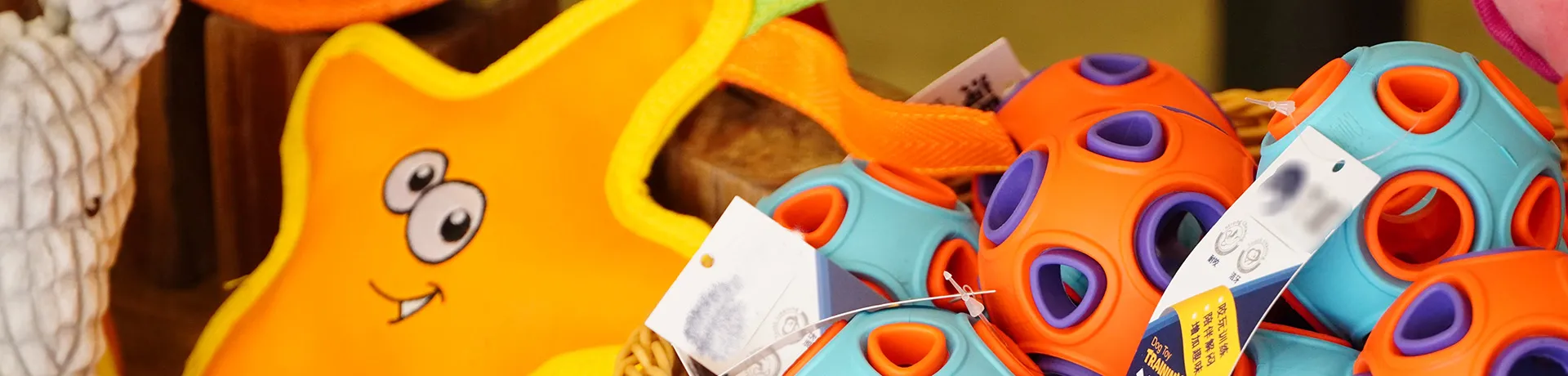
With the rapid development of the pet rubber toy market, the industry’s low barriers to entry and promising market prospects have attracted a large number of small and medium-sized manufacturers and cross-sector enterprises to enter the market. As the number of market players continues to rise, competition within the industry is intensifying, and the issue of low-end, homogenised competition is becoming increasingly prominent. Establishing a competitive advantage through differentiation has thus become crucial for companies to gain a foothold in the market and break through development bottlenecks. Currently, the majority of small and medium-sized enterprises in the sector lack core R&D capabilities and an innovative mindset. Products are heavily concentrated in traditional, mass-market categories such as basic chew sticks, rubber balls and chew toys, with little variation in materials, design or core functionality, and a lack of distinctive features or technical barriers. This monotonous product structure has plunged the market into a vicious price war, forcing companies to rely on low prices to capture market share. Consequently, the industry’s overall profit margins are being continuously squeezed, severely hampering high-quality upgrading and development.
To escape the predicament of homogenised competition and break the cycle of low-price market stagnation, leading enterprises and emerging brands within the industry are increasingly investing in differentiated innovation. They are delving deeply into niche segments and focusing their efforts precisely across multiple dimensions—including materials, functionality, design and usage scenarios—to create distinctive products with high brand recognition. In terms of materials, the focus is on developing products using new materials that are eco-friendly, lightweight and bite-resistant; in terms of functionality, products with specialised features such as antibacterial properties, puzzle-based food dispensing, slow-release dental care and smart interactive functions are being launched; In terms of design, companies are moving away from cookie-cutter shapes to align with mainstream aesthetics, emphasising personalisation and creativity to create products with distinctive appearances; regarding usage scenarios, they are developing specialised products tailored to specific contexts—such as outdoor walks, indoor play, teething for young pets, dental care for senior pets and travel by car—to precisely meet the niche needs of different pets and situations.
At the same time, the company is no longer confined to single-product innovation but is placing increasing emphasis on brand-building and refined operations. By strengthening brand development—through cultivating a distinctive brand image, deepening user service and building a strong reputation—it is enhancing the market recognition and core competitiveness of its products. This comprehensive, differentiated competitive model not only effectively helps companies escape the vicious cycle of low-end price wars, significantly increasing product value-added and profit margins, but also enriches the industry’s product portfolio, precisely meets diverse market demands, and continuously drives the pet rubber toy industry away from an extensive development model towards a steady transformation and upgrading towards high quality, refinement and diversification.


