
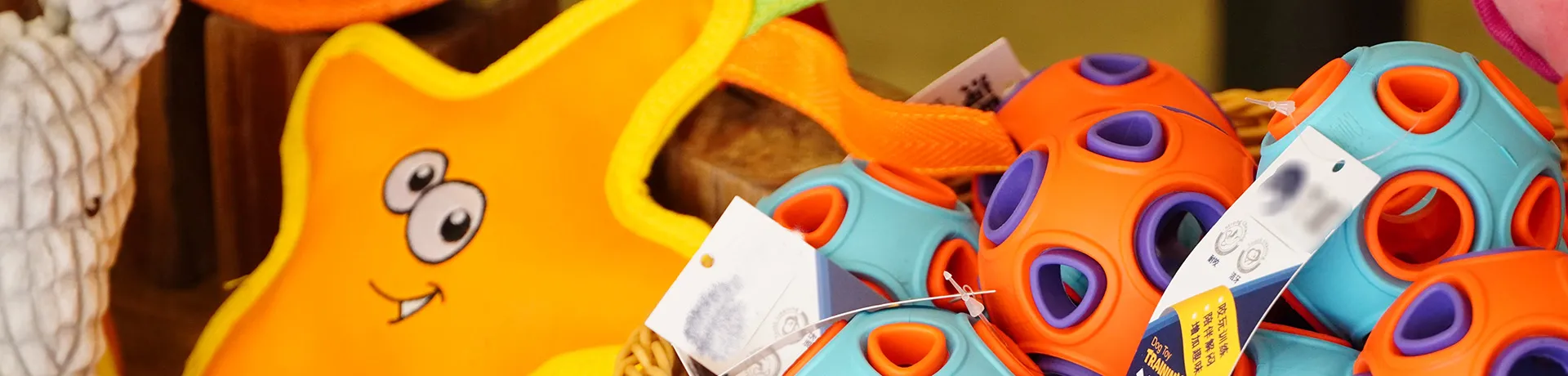
Benefiting from the implementation of RCEP tariff reduction policies, the rapid development of cross-border e-commerce platforms, and the prosperity of the global pet economy, China's pet rubber toy export business has maintained sustained high growth, with strong demand in overseas markets such as Southeast Asia and Europe and America. Data shows that in 2024, China's pet rubber toy exports reached $2.8 billion, a year-on-year increase of 22%, with Southeast Asia growing by over 25% and becoming the fastest-growing export region. Global online retail sales of pet supplies continue to rise, reaching $38.7 billion in 2023, with rubber toys accounting for over 60%. Europe, America, and North America remain key overseas markets, accounting for more than 60% of total exports. Overseas consumers have extremely high safety standards for pet toys, and products with international certifications such as FDA food contact grade, EU EN71, and German LFGB possess greater market competitiveness and can command higher premium margins. In recent years, the importance of cross-border e-commerce channels has become increasingly prominent, with export share rising from 23% in 2020 to 47% in 2025. The emergence of new models like live-streaming e-commerce and independent websites has enabled domestic products to reach overseas end-users directly, reducing intermediaries and increasing premium margins by over 30%, becoming a new engine driving export growth.
As the trend of refined and anthropomorphic pet care deepens globally, overseas pet owners increasingly prioritize the durability, chew-resistant performance, and playful design of pet toys. This has compelled domestic manufacturers to accelerate their transformation and upgrading, with many factories boosting R&D investments to introduce diverse functional rubber toys, such as dental-cleaning, elastic interactive, and sound-emitting toys, breaking free from the low-end homogenization competition. Meanwhile, leading foreign trade enterprises have proactively established overseas warehouses and local after-sales systems to shorten order delivery cycles, effectively reducing logistics losses and cross-border after-sales disputes, thereby further strengthening customer retention abroad. However, the industry also faces significant challenges, including the gradual rise of local competitors in Southeast Asia, tightening trade barriers in some European and American countries, and cost pressures from fluctuating rubber prices. These factors are pushing small and medium-sized export enterprises to expedite quality certification processes, deepen specialization in niche markets, and build independent brands through refined cross-border e-commerce operations. By transitioning from a simple OEM/ODM model to high-value-added branded exports, they aim to stabilize the foundation of foreign trade growth and continuously tap into the long-term incremental potential of the global pet market.


