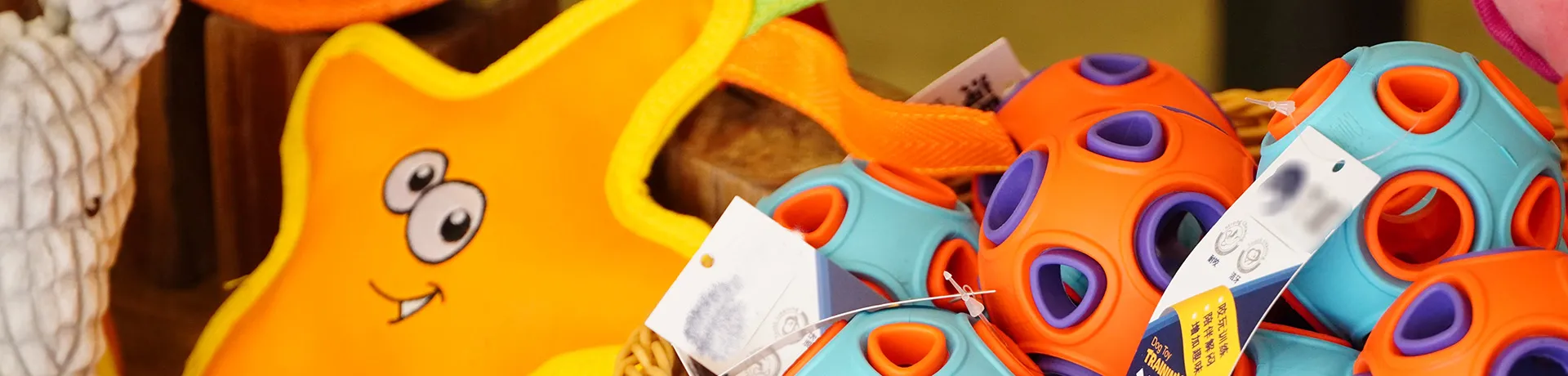

In 2026, the country’s first rubber recycling system for pet products was launched as a pilot scheme in Shanghai and Hangzhou. Offline pet shops have installed collection bins for used rubber toys to collect worn-out and discarded natural rubber toys.
A 2026 domestic professional dog training industry survey revealed that 90% of certified trainers use rubber tug-of-war rings and rubber bite-resistant sticks as primary training tools. Natural rubber-based interactive toys offer moderate resilience, resisting breakage during tugging exercises. These toys effectively train dogs' bite control while fostering trust between owners and pets, replacing traditional canvas or hemp rope training tools.
In July 2026, two pet supply companies in Dongguan, Guangdong, received a cross-border order from the EU for one million rubber dental toys. The entire batch of toys passed the stringent dual safety certifications of EN71 and REACH for EU pet products, enabling them to be sold in supermarkets across the 27 EU countries.
In 2026, a niche pet consumption trend emerged, with customized rubber teeth-cleaning toys engraved with pets' names and birthdays gaining popularity on Xiaohongshu and pet communities.
Whilst the rubber pet toy market was previously dominated by dog owners, a marked shift in consumer behaviour emerged in 2026, with cat owners driving a sharp rise in sales of small rubber cat toys.